As we prepare for our first full week of school closures, I wanted to share some thoughts and ideas about how best to cope with the schools being closed and your children being at home for this extended period. I know lots of people are busy sharing tips and schedules so what I’m going to say might not be new, but as is often the way, writing these things down and sharing them with you helps me to get them straight in my own head!
1. Try to create a routine
This is a strange situation for all of us. This isn’t the school holidays, it isn’t a time for days out and adventures. There’s a lot of pressure on many parents to continue to work from home whilst trying to look after their children and maintain some semblance of education. For everyone’s sanity, we’ve set out a bit of a daily routine – one which factors in getting school work done, exercise, reading and things that the kids actually want to do as time to switch off and relax in front of the telly / Xbox / tablet alongside making sure Dave and I can keep on top of our own work commitments and general running of the house! I’ve fully involved the kids in setting out this timetable so that they are able to take ownership of it – and in theory can’t complain when I implement it . . .
Read more about our “Quarantine Routine” here

2. But don’t panic if it goes wrong
And, whilst that routine is all well and good – it is only a guide to make sure we get things done and have a bit of a pattern to our day. If it goes wrong and we spend more time watching films one day than we had planned, or we miss something out, the world won’t come to an end.
3. Don’t stress too much about trying to educate
I know that we are all worried about what impact these lost weeks might have on our children, we are worried that they might fall behind. But, don’t forget we are all in the same boat. Everyone is going to end up being various stages of “behind” and as teachers, we will work very hard to catch everyone back up when normal life is resumed and we get back into our classrooms. Every family set up will be different – I’m in the privileged position that I can sit with my kids and work with them as I’m not in school myself at the moment and my blog work can happen when they are in bed, but other parents are working from home full time and will have meetings and phone calls to deal with. I know that the school I work in has worked hard to make sure the tasks that have been set can be completed independently. This is very much about keeping things ticking over rather than teaching new things – when it comes to English and Maths, there is a very real possibility that because things are often taught very differently to how we were taught as children, you could end up muddying the waters.
4. Feeling safe and happy is more important
These are frightening and unfamiliar times for children as well as adults – being out of their usual routine and expected to stay at home indefinitely because of a scary virus is a big deal – Amy is really worried we will get locked down and “pushed back in our houses by policemen with guns”. The most important thing we can do at the moment is remain calm and reassure our children by answering their questions as best we can. So if they are having a wobbly day and need more cuddles and conversation than anything else – give that to them, times tables practice can wait!
5. Do read
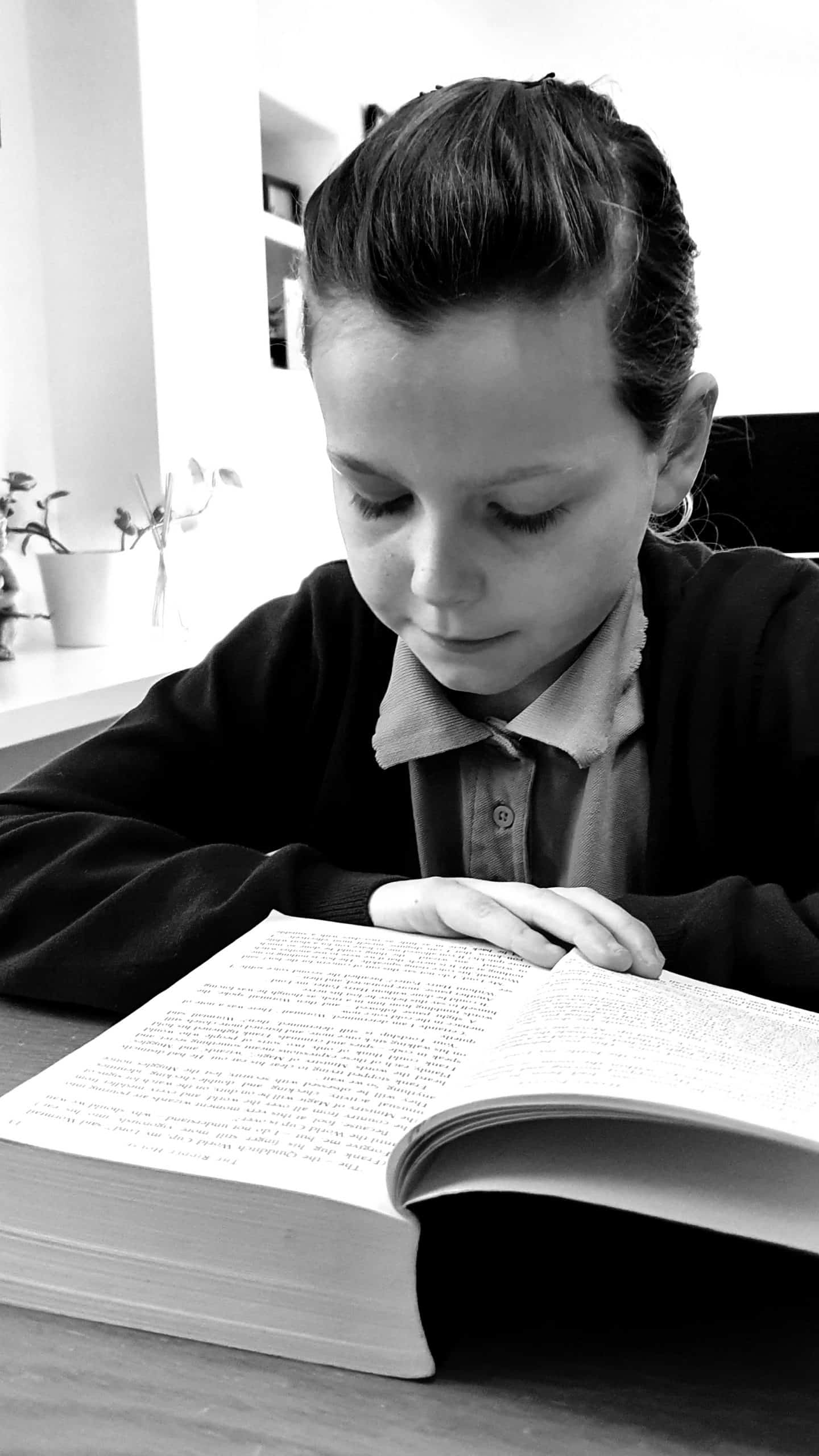
Me telling you to read with your kids isn’t a new thing – but I honestly think the most important thing you can do for them during this time off school is keep them reading. Your school might have sent home reading books for them, or they might have taken their reading books off them – each school is doing things differently here. But, making sure your children keep reading regularly will really make a big difference to them. (I was super slack with Amy’s reading last summer holidays and the fallback come September was significant – it took her a good few weeks to catch up.) Also, don’t forget that Audible UK have made hundreds of children’s audio books free to help during this crisis period and there’s a whole load of family friendly podcasts here.
6. Try to complete the work school have set (and ask for help if you get stuck)
All schools should have made arrangements to provide children with work during the closures – some will have sent home packs of work (we spent last week creating folders with equipment and work in to send home), others will be doing this mostly online. Ben, Chloe and Amy’s school is using SeeSaw to set work and keep in touch with children who are at home – Ben tells me he will be able to message Miss C via the app and we can upload pictures of the work they have done for their teachers to check. This is a great use of technology – but one I think a lot of schools are relying on as Dave couldn’t get on the website this afternoon to set them all up – we think it had crashed due to too many parents doing the same thing!
If your child gets stuck with their work and you need help – shout! There are teachers all over social media offering their support – and I’m more than happy to chat on twitter / facebook / instagram and help out.
7. Get outside regularly (but remeber social distancing!)
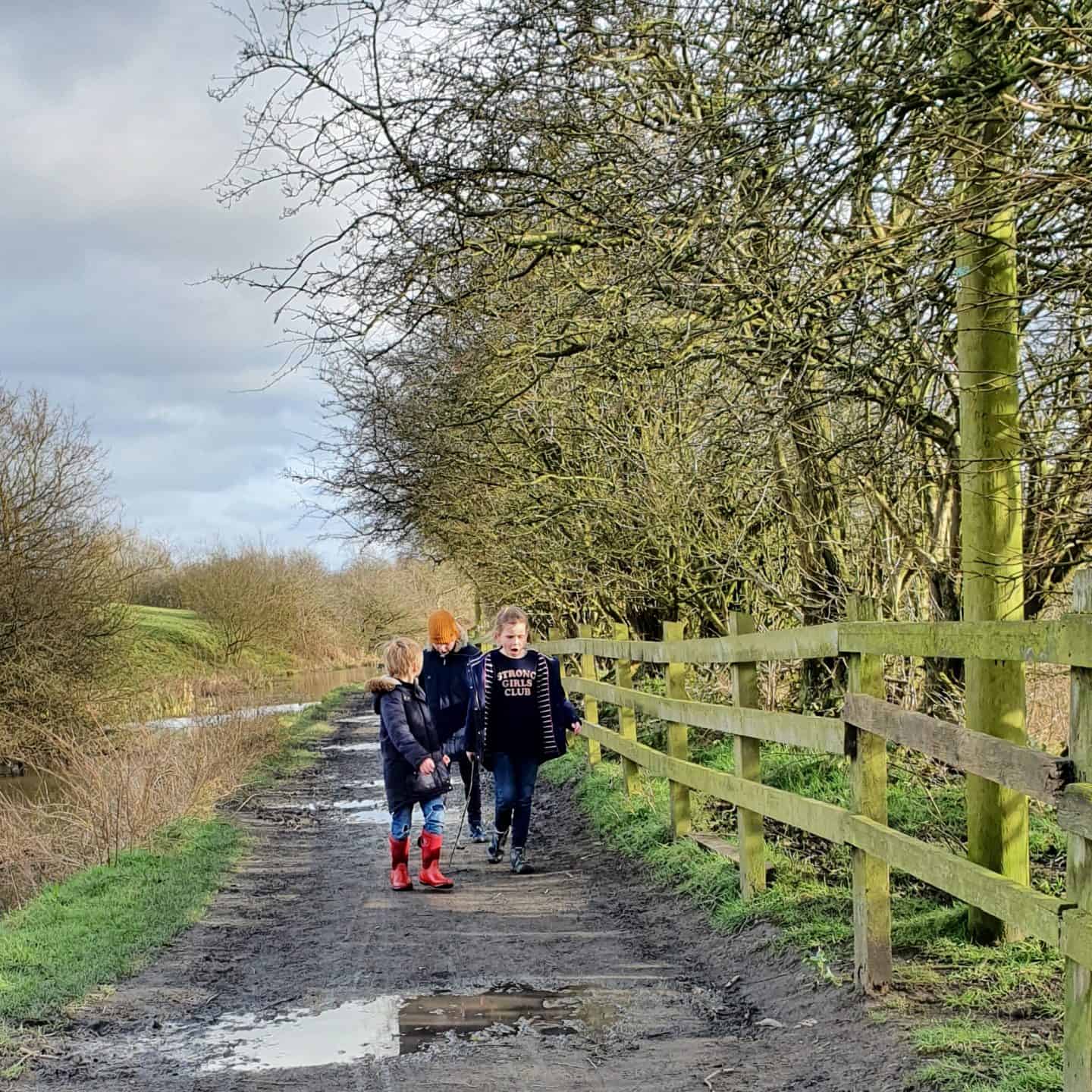
For both our mental and physical health, it’s important to try and get outside regularly – I’ve currently factored in playing outside or going for a walk into our daily time table. However, it’s even more important that we stick to the guidelines around social distancing (we’ve all seen photos of busy parks and coastal areas over the weekend). If we don’t stick to these guidelines, very soon we won’t be able to go anywhere at all.
Check out some of our favourite walks here!
8. Exercise doesn’t have to be outdoors!
As well as trying to get outside each day, I’ve also planned in daily Joe Wicks workouts (he’s doing special lives for kids on Youtube at 9am every morning) and Amy was keen to continue with Cosmic Kids Yoga which she already does at school. We’ve agreed that where possible Dave will do the Joe Wicks workouts with them (though, as a key worker he still has to go out to work at least half of the week) and I’ll do the Yoga in an afternoon with them.
9. Be flexible
We can make all the plans and time tables we like, but in this ever changing situation, we just need to be flexible. Nobody knows how long this could go on for – though I know we are mostly working to the theory that the kids might not get back to school this academic year. This lockdown is a marathon not a sprint – it’s going to take time and we need to be patient with ourselves and each other if we’re going to get through it.
Our plan at the moment is to re-do our timetable every Monday morning – so we can move things around, add new things in, give more time to the things we enjoyed in the previous week or catch up on school work we might have missed when we were too busy listening to science podcasts.
We need to take this one day, one week, one month at a time. Slow and steady wins the race.
10. Remember this too will pass
This isn’t forever. One day, we might look back on this period with a fondness for the quality time it gave us together, for the slower pace of life. It is going to be hard at times, it isn’t going to be over as quickly as we might like, but as with all things in life this is just a phase; this too shall pass.
Good luck! Stay strong! Come find me on twitter / facebook / instagram if you need a chat or some help with school things!

If you have enjoyed this post and found it helpful, here are a few ways you can say thanks and support We’re going on an adventure:
Click here to buy me a virtual coffee – it’s like a little tip jar but with caffeine!
I’d love for you to tag me in any photos of your adventures on Social Media if one of my posts has inspired you to visit
Click here to leave We’re going on an adventure a Google Review
Share this post with your friends – you’ll be helping me and them!
Follow We’re going on an adventure on Facebook or Instagram