Last Updated on 9 August 2024 by Colette
This post contains affiliate links. As an Amazon Associate I earn from qualifying purchases.
Packing up after a camping trip and then unpacking, cleaning and putting everything away again at home afterwards is without doubt my least favourite thing about camping. I hate it and mostly just want to throw everything away and start again – but of course that’s not sensible / practical / environmentally friendly is it!
When it comes to packing up after a camping trip, I’m always keen to just get the job done and leave the campsite asap so we can get home, get showered and get settled on the sofa – but actually taking a little extra time to sort your kit out properly as you pack away will pay dividends and future you will appreciate your efforts. We are always extra careful with packing up when we know it’s going to be our last camp of the season.

While you’re still at the campsite
Make sure your tent is completely clear before you start to take it down
Dave has previously lost his wallet only to realise he’d left it in the tent and he’s had to unpack the whole thing in the garden when we got home to find it. I’ve also heard tales of people leaving their car keys in the tent and only realising when they’ve got the whole car packed up and are ready to leave.
We tend to have a bit of a routine for clearing the tent – starting in the bedrooms and packing up all the bags / dirty washing, pulling the beds and sleeping bags out so they can be packed up properly and taken to the car etc. Then clearing anything in the main living space itself.

Give the inside of your tent a good sweep
Make sure you’ve got a dustpan and brush in your camping kit and give the inside of your tent a good sweep out once it’s completely empty – no matter how strict you are on the “no shoes in the tent rule”, you’ll still find there’s bits of dead grass, probably a few crumbs and maybe a bit of glitter too if you’ve been camping at a festival!
Take some time to dry off your tent
If your tent is just a bit damp from the morning dew, then a quick towel off before you pack it away should see you right (or if you’re lucky, by the time you get round to taking it down, a bit of morning sunshine and a light breeze will have done the job for you). If it’s soaking from a downpour, then you’re going to need to get it all out to dry once you’re home – either setting it up in the garden or hanging it over the banister – whatever you can do to make sure it’s properly dried and aired otherwise you’re very quickly going to end up with a damp, smelly and probably mouldy tent.


Make sure everything is cleaned before you put it away
On our most recent camping trip, I set up the kitchen cupboard only to find the top of it was sticky – it hadn’t been used for nearly a year so that had been sat there for sometime. Luckily it was just a sticky mark that hadn’t gone mouldy or anything but it could have easily ruined the unit and its storage bag. I was extra careful to make sure the surfaces were properly cleaned before it got packed away again at the end of the trip!
Make sure you collect in all your pegs
Don’t leave any pegs in the ground – you’re going to need those next time! Dave has invested in some heavy duty pegs that we use for the corners of the tent and whichever side of the tent is taking the brunt of the wind for extra security. We always like to make sure we’ve got some spare in case any pegs get lost or bent beyond usefulness. Try to knock off the worst of any mud on your pegs before storing them – again, you don’t want anything going mouldy in storage so if they’re really filthy it would be worth giving them a proper clean when you get home.
Have a set place for everything
We find it most efficient to have a set place for everything. We have a mallet for driving pegs into the ground that lives in the tent bag along with all the tent parts. As soon as we’ve finished using it it goes back in the tent bag so you should never have to wonder where it is in the event you need a mallet. We also keep the tent footprint in the tent bag for the same reason, but this only works if your tent bag is big enough which isn’t always the case.
I know it probably seems really obvious but putting things back in the same place – and in the place you’re most likely to need it – means you can lay your hands on it quickly which is always going to be important if you’re setting up in the rain or racing nightfall.

When you get home . . .
If the tent or any other equipment was packed up wet – get it out as soon as possible to give it chance to properly air dry.
Hang your sleeping bags out on the line – it’s not advisable to wash sleeping bags regularly but rather to just hang them out on the washing line for a good airing after your trip. Unzip them and hang them out for an hour or two to give them a freshen up. I usually only wash them once at the end of the season before putting them away and even then only if we’ve done quite a few trips.
Make sure your cool bag / box is properly emptied and give it a good wipe out with disinfectant spray or Milton to make sure it’s properly clean. Give it chance to dry thoroughly before storing. (The team at PACMAT recently found a potato in their cool bag two months after Glastonbury – learn from their mistake!)
Put any cutlery, cups, plates, pans etc through the dishwasher (if they are dishwasher safe) or give them a thorough wash in hot soapy water – our kids do the washing up when we’re camping so I always make sure everything has had a proper wash at home before it goes back into storage. Again, make sure everything is fully dry before you put it away.
Replace anything you’ve used up – or pop a note in your kit / keep one on your phone to remind you what you need to add before you go camping next. I’m talking ketchup, tea bags, salt, tea towels, firelighters – the sort of things you might forget to replace. (I usually have a list on my phone that I add to when we’re camping of things we’ve forgotten or run out of so I can make sure they’re added in for next time.)

Fix anything that needs fixing – if you noticed any damage to your tent or equipment when you were packing it away, get it sorted now rather than when you need it next and might have forgotten. We noticed as we were packing up that one of the camping chairs had lost a nut and so the arm was loose – as I’m writing this, we’ve just realised that Dave has since put the camping chair away broken and one of us (or probably both of us if I’m honest) is going to be really annoyed when we get the kit out for a festival at the weekend and realise it hasn’t been sorted!
Storing your camping gear
When it comes to storing your camping gear, it really depends on what camping gear you’ve got and what storage space you have – so all I can do is tell you how we store ours in case it helps!
Whilst I would suggest trying to keep all your kit together for ease, we don’t have the space to do that so our camping equipment is split across our very small garage (it’s more the size of a shed really) and our loft.
We keep the tent itself in the garage along with our spare gas canisters.
Everything else goes in the loft – the camping chairs, the camp beds, the sleeping bags, kitchen units, etc.
We have a small box (which we ingeniously named, “the box of light”) which we keep all our lights in – head torches, hand torches and lights. Having them all together in one box means they are easy to find and easy to maintain – we usually check if they are charged or need new batteries before a trip rather than after. The “box of light” lives in the utility as we occasionally need a head torch for DIY jobs or the kids. It’s also handy in case we ever have a power outage.
The kitchen utensils – camping kettle, stoves, bbq tools, cutlery etc are all kept in two plastic boxes – they are stored in the loft like this and we also transport them in the boxes so it means everything is kept together and we don’t have to worry about forgetting things. (This is where that list I mentioned comes in handy – anything we’ve realised is missing from the box or has been used up, gets added to the list for next time)
All the sleeping bags, mats and inflatable pillows go into one large storage bag to make sure they’re all in one place and don’t get forgotten about – sometimes we transport them in that storage bag, other times they get taken out so they can be squished into smaller spaces in the car!
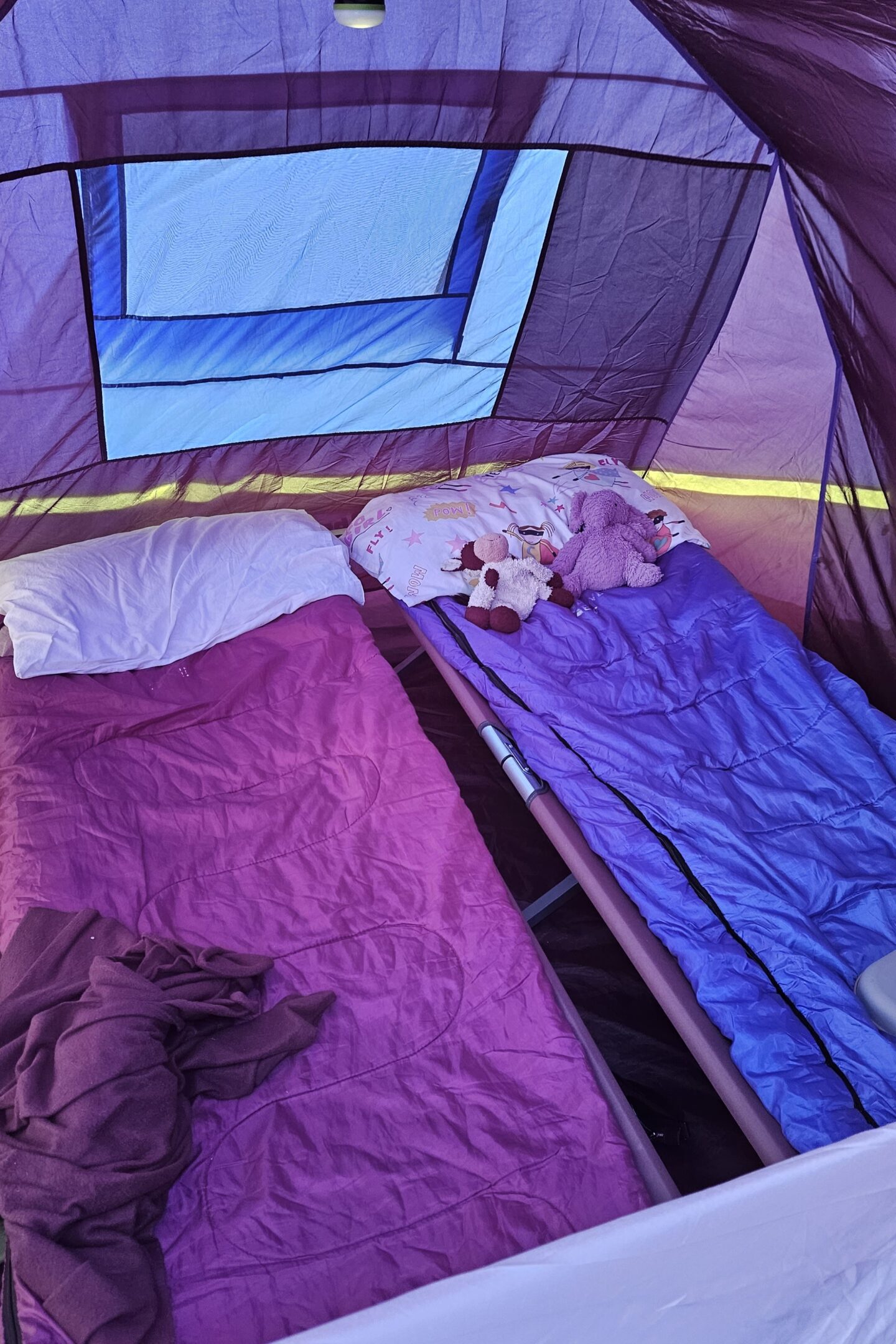
In an ideal world, it would all go into one place in the garage so it could be put straight in the car but we just don’t have the room to do that – in an even more ideal world we’d keep it all stacked on a trailer ready to just hook up but that would involve us having about six times the garage space we do now!
If you’ve got post-camping tasks, tips or hacks that you you think I should include, let me know!
For more camping content, check out these posts next:
Camping kit you should invest in
Tips for choosing a large family tent
Essential camping kit for dogs

If you have enjoyed this post and found it helpful, here are a few ways you can say thanks and support We’re going on an adventure:
Click here to buy me a virtual coffee – it’s like a little tip jar but with caffeine!
I’d love for you to tag me in any photos of your adventures on Social Media if one of my posts has inspired you to visit
Click here to leave We’re going on an adventure a Google Review
Share this post with your friends – you’ll be helping me and them!
Follow We’re going on an adventure on Facebook or Instagram